90’s Puerh Tasting
Welcome to the Tea Chat OTTI, featuring Puerh tea from the 1990’s! I feel that although there is great enthusiasm generally about puerh, there is still not much literacy on aged teas.

I only navigated the darkness of the puerh cave with the guidance of early pioneers like Jason, and both of these teas also come to me by the generosity of Tea Chat members. I hope that by passing it on, many more of you will come to learn about and enjoy aged teas.
1997 8582 “Wet Stored”
This classic Menghai recipe was stored in a more humid climate, resulting in a richer and smoother brew. And not many ‘off’ tastes as a result. Decent Cha Qi.
Compared to the current crop of Dayi products, compression of the cake is very loose and the edge is coming apart just by handling it.
This cake has ‘white frost.’ This mold is considered beneficial to the tea, and harmless to you. If you like cheese, you are probably already used to this.
Make sure to read up on “traditional” storage methods.
Brewing this one is quite simple, as it will not easily yield bitterness.
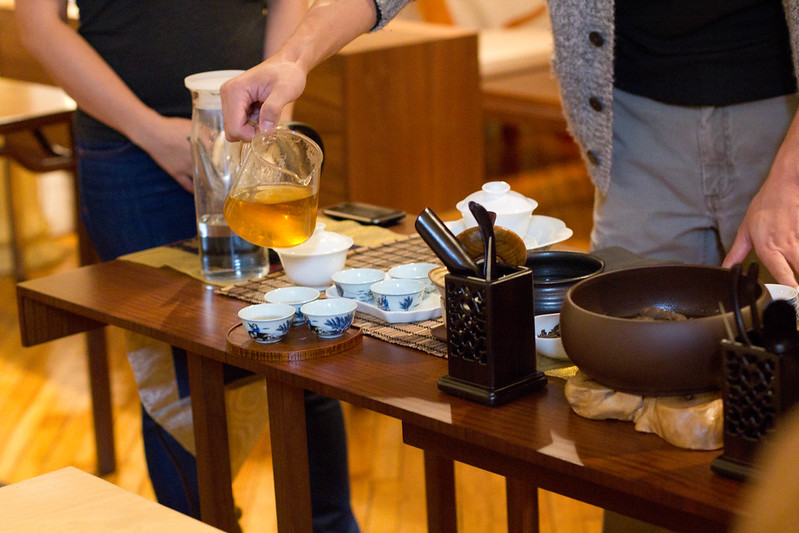
Brewing
1990s Raw Puerh Brick
Stored in the dryer climate of Malaysia, this brick has a completely different flavor profile from the 8582. The leaves are pretty high quality for a brick. The brew is extremely thick, when brewed strong it may be astringent or aggressive. Color is dark orange, approaching red.

Comparison to 2005 tea brick (left).
Edit: So it is wisely pointed out that Malaysia is not in fact a dryer climate, and a lot of the tea stored there results in something quite “wet.” This was stored, then, quite intentionally to achieve a “dry” result. At the risk of muddying the waters, please read Cloud’s take on Wet and Dry Storage.
Which storage do you prefer?
These are pretty extreme examples to highlight the differences. Both have big fans, both have their detractors. How about you?